
Secure & encrypted platform · 18+ only · Play responsibly

Live casino table with a dealer

Live dealer & speed tables

Online Baccarat in India

The banker bet would be profitable for you if there were no commission — and neutralising that would take a charge of just 2.69%. Tables charge 5%. Everything about how this game makes money is in that gap.

Banker edge
1.06%
Commission
5%
Needed
2.69%
Min bet
₹100

Three Bets

The whole game, in one table

Baccarat gives you three options and one of them costs more than thirteen times the others. That is the entire strategic content of the game.

Eight-deck baccarat — win frequency, payout and house edge on each bet
BetWinsPaysHouse edgeVerdict
Banker45.86%1 : 1 less 5%1.06%The best bet on the table, every time
Player44.62%1 : 11.24%Slightly worse, and no commission to think about
Tie9.52%8 : 114.36%The most expensive bet in the casino

Back the banker and stop. It is the cheapest bet on the table on every single hand, and no sequence of previous results changes that. The commission makes it feel like the punished option, which is precisely why so many players avoid it and take the more expensive one instead. The tie's 14.36% is compared against every other game in the lobby on the casino page.

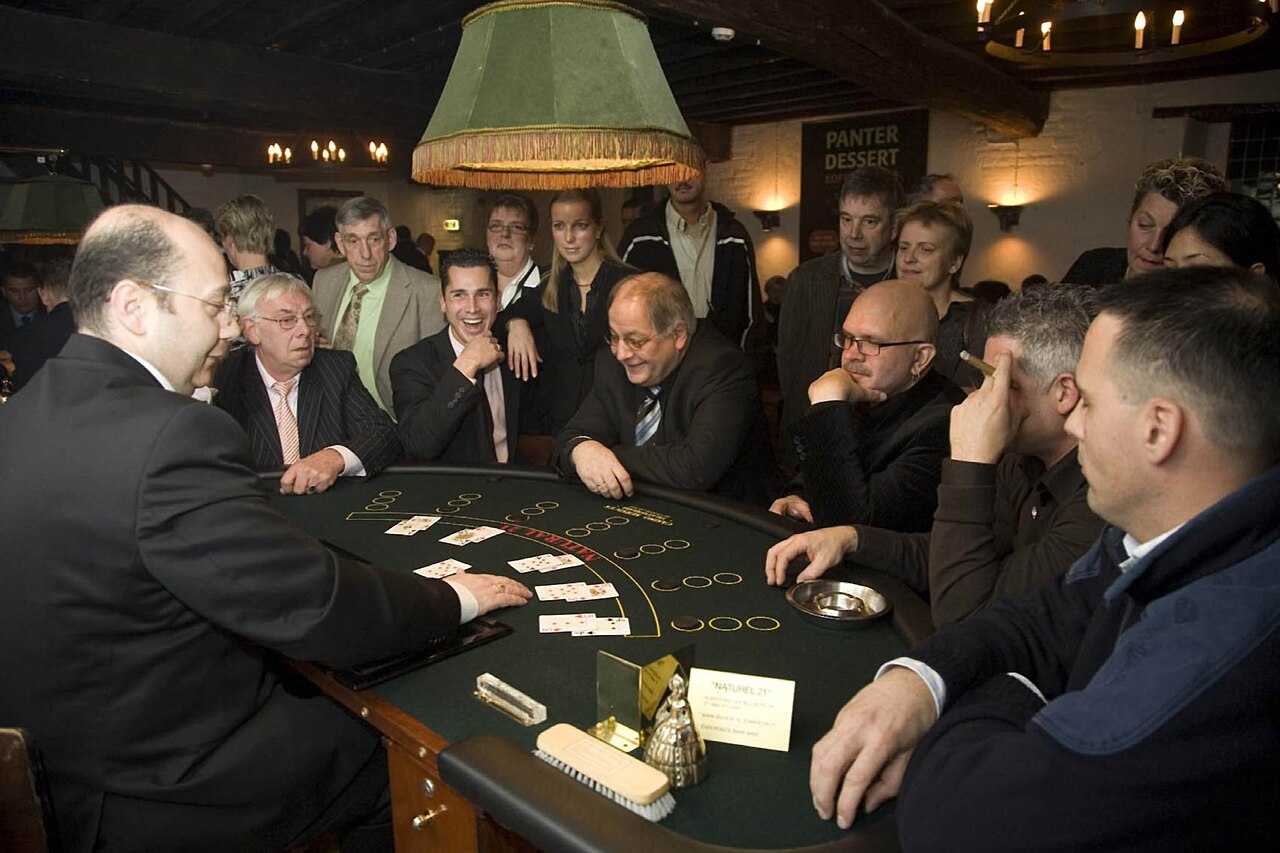
Dealer turning the final card slowly on a live baccarat table
The squeeze is theatre, and good theatre. It changes nothing about a hand whose outcome was fixed the moment the cards were dealt.Donald Trung Quoc Don (Chữ Hán: 徵國單) - Wikimedia Commons - © CC BY-SA 4.0 International.(Want to use this image?)Origina / CC BY-SA 4.0

The Number Behind The Game

Why the commission is 5%

It exists because the banker bet would otherwise favour you. What is rarely said is how much smaller it could be and still do that job.

The banker wins 45.86% of hands and the player 44.62%, with the rest tied. Backed with no commission at all, the banker bet would return about 1.24% to you — a genuinely positive proposition, and obviously not one any casino will offer.

So a commission is taken from banker wins to cancel that advantage out. The arithmetic for the size needed is simple: the advantage divided by how often the bet wins, which comes to 2.69%. At that rate the banker bet would be exactly break-even, costing nothing and returning nothing.

Tables charge 5%. The extra 2.3 percentage points are not covering anything — they are the profit, and they are the reason the best bet in baccarat still costs 1.06% instead of zero. It is an unusually clean example of a house edge you can see being installed, rather than one buried in a payout table.

Looks Generous

Commission-free tables cost more

Removing the 5% sounds like removing a charge. What replaces it takes more than the commission did.

Standard versus commission-free baccarat, house edge on the banker bet
VersionThe ruleHouse edge
Standard tableBanker pays 1:1, 5% commission on wins1.06%
Commission-free tableNo commission, but banker wins with 6 pay only 1:21.46%

A banker win with six pays half. That single exception costs more than the 5% commission it replaces, taking the edge from 1.06% to roughly 1.46%. The rule is easy to miss because it only applies to one specific total, and it is described using the language of a concession. If both tables are running, the one charging commission is the cheaper game.

A game with nothing to get wrong

Baccarat is the only major table game where you make no decisions after your bet. Whether a third card is drawn is set by a fixed table of rules that neither you nor the dealer can influence. Pick banker, player or tie, and the hand plays itself out.

The exact opposite of blackjack

That makes for an interesting pairing with the game next to it in the lobby. Blackjack hands you real decisions and prices the game on the assumption you will make them well, so playing badly is expensive. Baccarat removes the decisions entirely and charges a flat rate for the privilege.

Which is better depends on what you want. If you are willing to learn a few rules, blackjack is much cheaper. If you want to sit down knowing that nothing you do can make it worse, baccarat at 1.06% is genuinely reasonable value and considerably cheaper than roulette at 2.70%.
Baccarat scoreboard showing grids of red and blue result markers
Four separate grids, meticulously maintained, tracking patterns in a sequence where each hand is independent of the last.hj_west from USA. / CC BY-SA 2.0

Four road maps, none of them predictive

No other casino game keeps records like baccarat does. The big road logs results in columns; the big eye boy, small road and cockroach road each track whether the big road is behaving regularly, at different offsets. Players watch them closely and bet on what they appear to show.

They are records, not forecasts. Every hand is dealt from a shoe that has no memory of the previous one, so a column of eight banker wins tells you precisely what happened and nothing whatsoever about the ninth. This is worth saying plainly because the sheer elaborateness of the displays implies otherwise — four separate grids maintained to that level of care look like analysis, and they are decoration.

None of which means you should ignore them. Following the road is a real part of the enjoyment for a lot of players, and there is nothing wrong with that as long as it is not driving your stake size. Betting bigger because a pattern looks due is the version that costs money.

Squeeze, speed and what they actually change

Live tables come in two moods. A squeeze table has the dealer revealing the final card slowly, drawing out a result that is already determined. A speed table strips that away and runs hands in a fraction of the time.

Neither changes the odds by a fraction of a percent — but they change how many hands you play in an evening, and the edge applies once per hand. A speed table at the same stake simply applies the same 1.06% more often, which is the mechanism set out in full on the slots page. If you are choosing between them on cost rather than preference, the slow one is cheaper.

Side bets and stakes

Pair and perfect-pair side bets sit alongside the main three, and they are priced in the same spirit as the tie — well above the banker and player bets. They are there for people who want a bigger swing than a near-even-money bet provides, which is a legitimate thing to want as long as the price is understood.

Live tables generally open around ₹100 and baccarat usually carries the highest maximums in the building. That is a legacy of the company the game has kept for decades rather than anything about its odds. Deposit and session limits are in your account settings — responsible gaming lists them, and they are worth setting before a high-limit table rather than after.

FAQ

Baccarat questions

Commission, commission-free tables, the tie bet and the road maps.

Read all FAQs
Which baccarat bet should I make?

Banker, essentially always. It carries a 1.06% house edge against the player bet's 1.24%, and the gap holds on every hand regardless of what has happened before. The 5% commission on banker wins makes it feel like the penalised option, which is exactly why many people avoid it — but even after the commission it is still the cheaper bet of the two.

Why is there a commission on banker bets at all?

Because without one the banker bet would be profitable for you. The banker wins 45.86% of hands to the player's 44.62%, so with no commission the bet would return about 1.24% in your favour. The casino has to claw that back, and it does so by taking a cut of banker wins. What is rarely mentioned is how big the cut needs to be — a commission of just 2.69% would neutralise the advantage exactly. The 5% charged is nearly double that, and the difference is where the house's profit on the bet comes from.

Is commission-free baccarat a better deal?

No, it is worse, and by a clear margin. Those tables drop the 5% commission but pay only half on a banker win with a total of six. That reduced payout costs more than the commission did: the house edge rises from 1.06% to about 1.46%. It is marketed as removing a charge and it actually increases what the game takes, which makes it one of the better examples of a rule that sounds generous and is not.

How bad is the tie bet?

It is the most expensive bet you will find in the casino. A tie lands roughly once every eleven hands and pays 8 to 1, which leaves a house edge of about 14.36% — more than thirteen times the cost of simply backing the banker. Our casino page compares it against every other game in the lobby, and nothing else comes close.

Do the road maps predict anything?

Not one thing. The big road, big eye boy, small road and cockroach road are elaborate and beautifully kept records of hands that have already been dealt, and every hand is independent of the ones before it. They exist because players want them, and casinos are happy to display patterns in random data at no cost. Reading them is genuinely part of the enjoyment for many people; treating them as a forecast is the expensive version.

Can I count cards at baccarat?

In theory a card counter can gain a very small edge on the tie bet in specific deck compositions, and in practice it is not worth attempting. The effect is far weaker than in blackjack, live tables shuffle frequently, and online RNG baccarat reshuffles every hand. Anyone selling a baccarat counting system is selling something that does not work in any setting you can actually play in.

Is baccarat a game of skill?

No, and it is unusually honest about that. The rules decide whether a third card is drawn — neither you nor the dealer chooses — so once you have picked a bet the hand plays itself. That makes it the exact opposite of blackjack, where decisions change the edge. If you want a game where playing well matters, blackjack is the one; if you want a game with nothing to get wrong, this is it.

What are the table limits?

Live baccarat generally starts around ₹100, with VIP tables running considerably higher. Baccarat typically carries the highest maximums in the building, which is a legacy of it being the game high-stakes players have gravitated to for decades rather than anything about the odds.

See all FAQs

Get Started

One bet, and it is always the same one

Open an account, add money through UPI, and take a seat at a live table with the cheapest bet on it already decided.

  • Banker at 1.06%
  • Live tables from ₹100
  • Squeeze and speed

Explore FairPlay