
Hit and stand
Take another card or keep your total. Going over twenty-one busts your hand immediately, regardless of what the dealer holds afterwards.
Live dealer & RNG tables
Played properly, blackjack is the cheapest game in the lobby — around 0.5% against you, where Andar Bahar is 2.15% and roulette is 2.70%. Played carelessly it is not. Below: the dealer bust table that explains every strategy decision, and the two rules that quietly cost you the most.
The Only Table That Matters
Every basic-strategy decision comes out of this one column. The dealer's upcard tells you how likely they are to bust, and that is what decides whether you take a risk or sit still.
| Dealer shows | Dealer busts | Read |
|---|---|---|
| 2 | 35.4% | Weak |
| 3 | 37.4% | Weak |
| 4 | 39.5% | Weak |
| 5 | 41.6% | Weakest |
| 6 | 42.3% | Weakest |
| 7 | 26.2% | Strong |
| 8 | 24.5% | Strong |
| 9 | 22.8% | Strong |
| 10 / J / Q / K | 21.2% | Strong |
| Ace | 11.5% | Strongest |
Read it as two groups. A dealer showing 2 through 6 busts between 35% and 42% of the time — they are in trouble, so you do not need to be. That is why strategy tells you to stand on a miserable 13 or 14 against a 5: you are not trying to make a good hand, you are refusing to bust before the dealer does. Against 7 through ace the bust rate falls to between 26% and 11.5%, so standing on a weak total just loses slowly. Then you have to draw.
Check The Felt
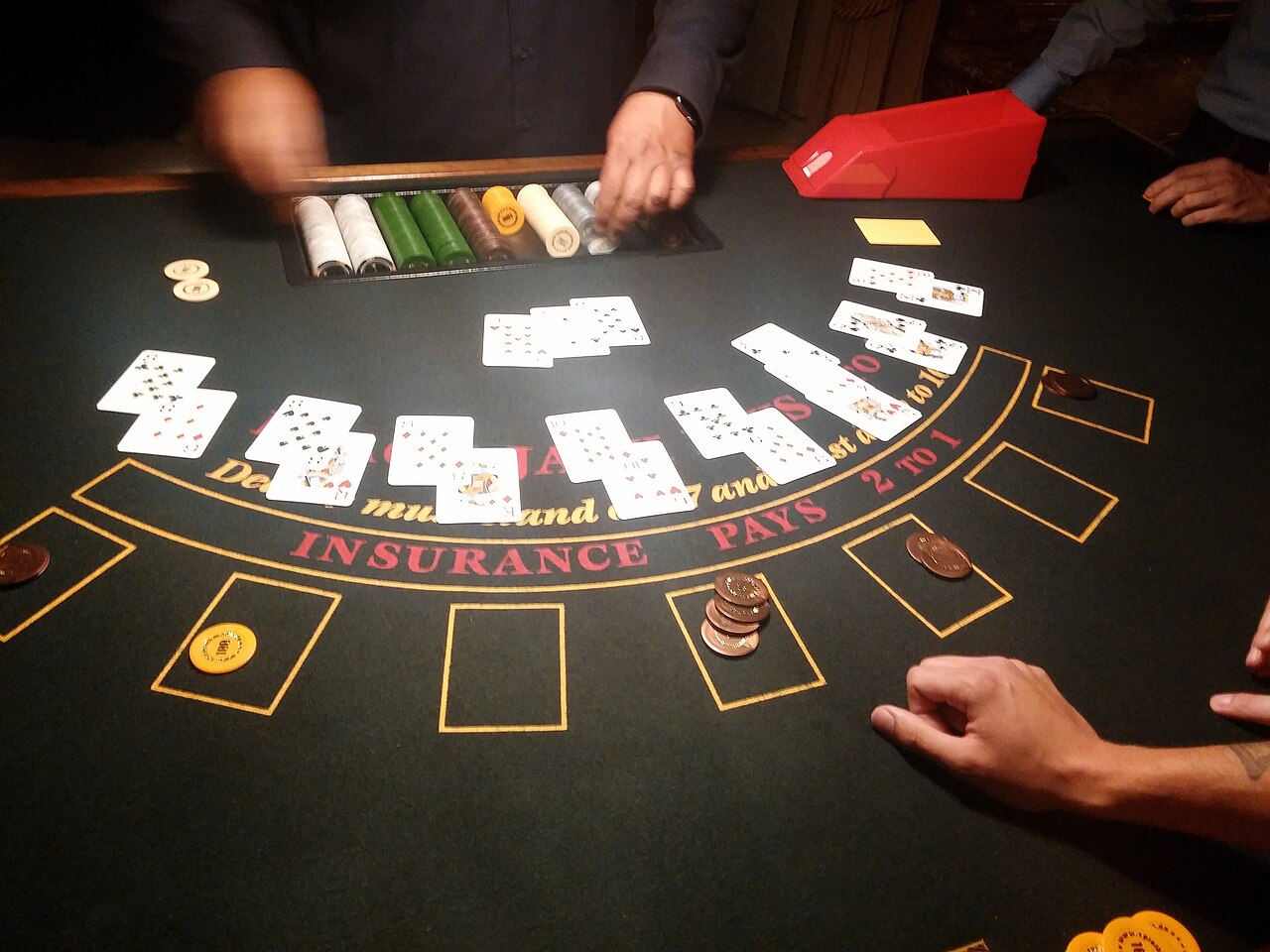
Some tables pay 6 to 5 on a natural blackjack instead of 3 to 2. It sounds like a detail. It is the most expensive thing on this page.
| Your bet | 3 : 2 pays | 6 : 5 pays | You lose |
|---|---|---|---|
| ₹500 | ₹750 | ₹600 | ₹150 |
| ₹1,000 | ₹1,500 | ₹1,200 | ₹300 |
| ₹2,500 | ₹3,750 | ₹3,000 | ₹750 |
| ₹5,000 | ₹7,500 | ₹6,000 | ₹1,500 |
It roughly quadruples the house edge. A natural turns up about 4.75% of the time, and on each one a 6:5 table keeps three-tenths of your stake that a 3:2 table would pay you. Multiply those together and the rule adds about 1.42% to the house edge — taking a well-played game from around 0.5% to nearly 2%. Every advantage blackjack has over roulette disappears at that one table, and nothing about how you play the hands can win it back.
Your Options
Blackjack gives you genuine decisions, which is what separates it from every other game in the casino. Two of the buttons are not decisions at all.
Take another card or keep your total. Going over twenty-one busts your hand immediately, regardless of what the dealer holds afterwards.
Double your stake in exchange for exactly one more card. On a hard eleven against a weak dealer card it is the most profitable move in the game.
Turn a pair into two hands with a matching second stake. Always split aces and eights; never split tens or fives.
Where offered, forfeit half your stake and end the hand. Correct on a hard sixteen against a dealer ace or ten, and almost nowhere else.
A side bet that the dealer's hole card is a ten, paying 2 to 1. It needs to land a third of the time to break even and lands 31% of the time.
Insurance wearing a different hat, offered when you hold a natural. Taking it converts a 3:2 payout into a flat 1:1 at exactly the same bad price.
In an Indian casino lobby, blackjack is rarely the busy table. Teen Patti and Andar Bahar are familiar from years of family games, and roulette needs nothing explained. Blackjack asks you to learn something first, so plenty of players skip it — and skip the best price on the site while they are at it.
Every other game here settles at a fixed cost. Andar Bahar takes 2.15% whatever you do, European roulette takes 2.70% on every bet on the layout, and no amount of thought changes either number. Blackjack is different because your decisions are part of the maths — the game hands you a share of the outcome, and if you use it properly the cost falls to around half a percent.
That is the whole trade. You accept some homework, and in return you play the only game in the building where being good at it actually matters. If you would rather not do the homework, that is a completely reasonable choice — but then Andar Bahar or baccarat will treat you better than blackjack played on instinct, because they ask nothing of you and charge accordingly.
When the dealer shows an ace, you are offered insurance at 2 to 1. For that to be worth taking, the hole card would need to be a ten-value card at least a third of the time. In a six-deck shoe there are 96 ten-value cards among the 309 you cannot see, so it is a ten 31.07% of the time.
The gap between 31.07% and the 33.33% you need is a 6.80% house edge — worse than anything else you can bet on here, and more than double the cost of a roulette spin. It gets accepted because it is offered at the exact moment you feel most exposed, and it is described using the language of protection. Decline it every time, including the version called even money.
A full strategy chart has hundreds of cells and you do not need them to start. Always split aces and eights. Never split tens or fives. Double a hard eleven against anything except an ace. Stand on hard twelve through sixteen when the dealer shows 2 through 6, and draw when they show 7 or higher.
Those four cover most hands you will be dealt, and they capture most of the difference between guessing and playing properly. The awkward cells — soft seventeens, when to surrender — can be learned slowly on ₹50 tables where mistakes cost almost nothing.
Hard sixteen against a dealer ten is the worst spot in the game. Hit and you bust more often than not. Stand and you lose to nearly everything the dealer makes, since they only break 21.2% of the time. Both options lose money and the strategy chart is simply telling you which one loses less.
It is worth knowing that in advance, because the hand feels like a mistake whichever way it goes and people change their whole approach after a couple of bad ones. Losing a hand you played correctly is not evidence of anything. It is what a game with a small edge looks like from the inside.
RNG blackjack starts around ₹50 and live dealer tables from ₹100 to ₹200, dealt from studios that run through the night on IST. Live tables give you a few seconds to think, which is genuinely useful while the four rules are still new — an RNG table will let you fire off a hundred hands before you have thought about any of them.
Before sitting down, check two things in the table info: what a natural pays, and whether the dealer hits or stands on soft seventeen. Both change the price of the game more than any decision you will make afterwards. Deposit and session limits are in your account settings if you want a firmer ceiling — responsible gaming covers all of them, and the casino page lists the house edge for every game in the lobby side by side.
FAQ
Strategy, insurance and the rules that quietly change the price.
Roughly 0.5% if you follow basic strategy at a table with decent rules, which makes it the cheapest game in the casino by a wide margin. For comparison, Andar Bahar runs at about 2.15% and European roulette at 2.70%. The catch is that the 0.5% figure assumes you play every hand correctly — the edge for someone guessing their way through is several times higher, and unlike roulette, blackjack genuinely punishes bad decisions.
No. Insurance pays 2 to 1, so it needs the dealer's hole card to be a ten-value card at least a third of the time to break even. In a six-deck shoe there are 96 ten-value cards among the 309 you cannot see, which is 31.07% — short of the 33.33% required. That gap makes insurance a 6.80% house edge, worse than any main bet on the site. It is offered when you are nervous precisely because that is when people accept it.
It is a table that pays 6 to 5 on a natural blackjack instead of the standard 3 to 2. On a ₹1,000 bet that is ₹1,200 instead of ₹1,500 — ₹300 gone from a hand you actually won. A natural turns up about 4.75% of the time, so that shortfall adds roughly 1.42% to the house edge, which takes a well-played game from around 0.5% to nearly 2% and undoes every advantage blackjack has. Check the payout printed on the felt before you sit down.
Because it tells you how likely the dealer is to bust, and that changes what you should do with a weak hand. A dealer showing a 6 busts 42.3% of the time; a dealer showing an ace busts 11.5% of the time. Against the 6 you can stand on a bad total and let the dealer break; against the ace you have to try to make a hand, because standing on 14 and hoping simply will not work often enough.
A hard sixteen against a dealer ten. Hitting busts you more often than not, and standing loses to almost everything the dealer makes. Both options are bad, which is the point — there is no good play, only a marginally less expensive one. Basic strategy says surrender if the table allows it, otherwise hit. The reason it feels wrong is that it genuinely is a losing spot however you play it.
Not in any practical sense. RNG blackjack reshuffles the virtual deck after every hand, so there is no running count to keep. Live dealer tables use continuous shuffling machines or shuffle at a shallow point in the shoe, which removes the deck penetration counting depends on. Anyone selling a counting system for online play is selling something that does not function.
Not all of it. Four rules cover most of the value: always split aces and eights, never split tens or fives, double a hard eleven against anything but an ace, and stand on hard twelve through sixteen when the dealer shows 2 through 6. Getting those right captures most of the gap between guessing and playing properly, and the rest can be learned at your own pace on low-stakes tables.
RNG blackjack starts at around ₹50 and live dealer tables typically between ₹100 and ₹200, with VIP tables considerably higher. Each table displays its minimum, maximum and full rule set before you take a seat — and the rule set is worth reading, because the payout on a natural and whether the dealer hits soft 17 both change the price of the game.
Explore FairPlay