
Betting from the capital
Delhi is a cricket city with an unusually strong kabaddi following and a football audience that watches Europe rather than India. It is also the only Indian metro where the question "what are the rules here" has three answers depending on which side of a flyover you sleep.
The Kotla plays slower than it looks
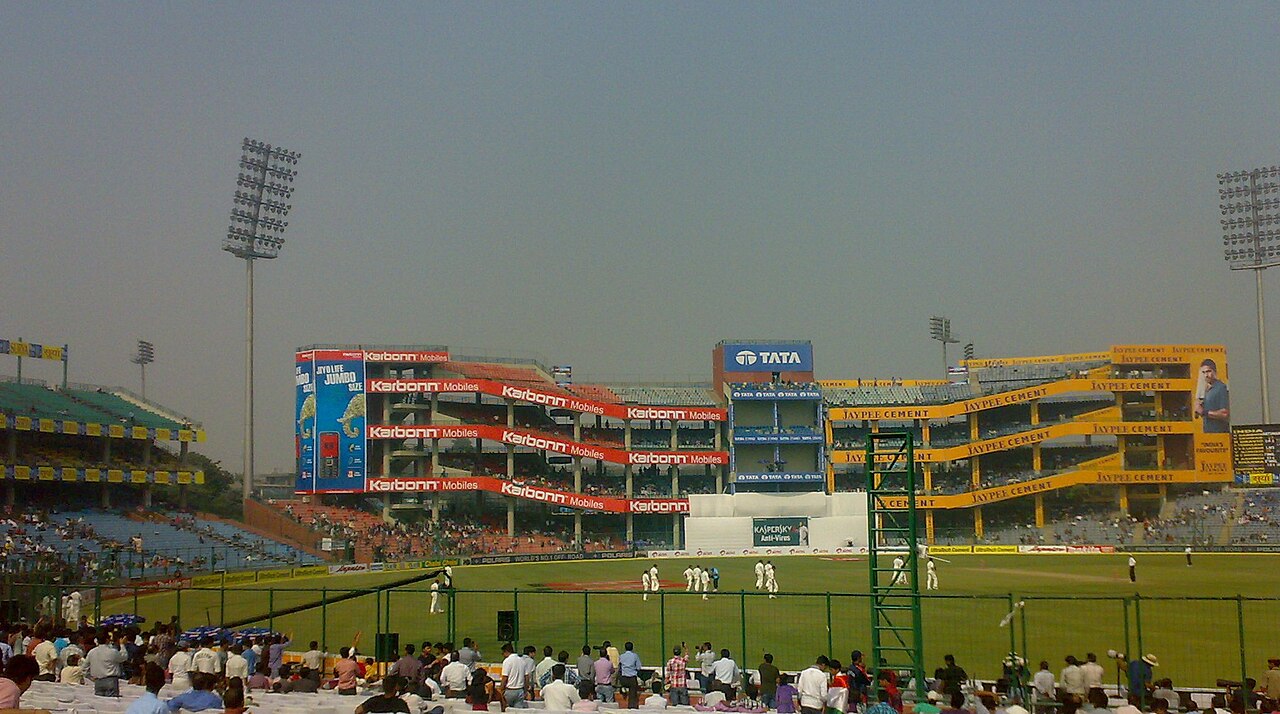
Grounds get reputations that outlive their surfaces, and the Arun Jaitley Stadium has one for being a batting venue. In practice it grips, it takes some turn, and it slows through the middle overs. Par sits below what a bettor coming from Bengaluru would assume.
The practical consequence is in the session markets. A middle-overs line priced off IPL averages is frequently a touch high at the Kotla, and spinners appear in top bowler markets more often than the venue's reputation implies. Waiting until the powerplay has finished before taking a totals position is worth more here than at a genuinely flat ground.
Fog is a real betting variable in December
No other major Indian sporting city has this problem. Delhi winters bring dense fog and poor air quality, and both have interrupted professional cricket in the city before — there is precedent for players taking the field in masks.
For most bettors this only matters on domestic fixtures in deep winter, when a shortened or abandoned match changes how markets settle. But it is worth knowing that a Delhi fixture in late December carries a weather risk that a Chennai fixture simply does not, and that the settlement rule printed on each market is the thing to read before staking.
Kabaddi has roots here, not just viewers
Pro Kabaddi is often described as a television creation, and in some cities that is fair. Around Delhi it is not. Haryana in particular has produced a large share of the league's professional players, and the sport has been played in the villages of the region for generations.
That depth of following matters for betting, because kabaddi markets are thin and priced by relatively few people. Somebody in the NCR who actually watches the league holds an information advantage that is very difficult to find in an IPL market — the kabaddi page sets out the scoring and which markets reward that knowledge.
A football audience pointed at Europe
Unlike Kolkata, Delhi has no deep domestic football culture to speak of. What it has is a large audience for the Premier League and the Champions League, which means a great deal of the city's football betting happens between 11 PM and 3 AM.
That has a practical consequence worth naming: those are hours when bank transfers do not move and tired decisions get made. UPI works identically at 2 AM and 2 PM, which is why it dominates here, and a deposit limit set in daylight is worth considerably more than good intentions at kick-off.