

Moneyline
Who wins, with no draw available. Overtime counts, so a game tied at the buzzer settles on the result after extra time rather than voiding.

NBA, EuroLeague & NCAA
The NBA tips through the Indian morning, not the middle of the night — which makes it one of the easiest overseas leagues to follow from here. And its totals lines are built from tempo, not talent, which is where most newcomers go wrong.
Live & Upcoming
Games in play and tipping shortly, priced both ways. Times are IST.
Prices shown are illustrative
Min 100 · Max 50,000
Min 100 · Max 50,000
Real Madrid v PanathinaikosLive
Min 100 · Max 25,000
Min 100 · Max 50,000
FIBA Qualifiers — India v Kazakhstan
Min 100 · Max 20,000
How A Line Is Built
Multiply possessions by points per hundred possessions, then double it for both teams. That is the whole calculation behind a totals line.
| Pace (possessions) | Rating 110 | Rating 115 | Rating 120 |
|---|---|---|---|
| 94 (slow) | 206.8 | 216.2 | 225.6 |
| 98 | 215.6 | 225.4 | 235.2 |
| 100 (average) | 220.0 | 230.0 | 240.0 |
| 102 | 224.4 | 234.6 | 244.8 |
| 106 (fast) | 233.2 | 243.8 | 254.4 |
Pace is the bigger lever. Read down the middle column: holding efficiency at 115, a slow game and a fast one are 27.6 points apart. Now read across the middle row: holding pace at 100, a ten-point efficiency gap moves the line 20. Those look comparable until you notice that twelve-possession pace gaps between teams are common and ten-point efficiency gaps are rare. Two excellent teams can produce a low total and two poor ones a high total — how fast they play matters more than how good they are.

Markets
Sixty-plus markets on an NBA game, from the moneyline to quarter lines and player props.
Who wins, with no draw available. Overtime counts, so a game tied at the buzzer settles on the result after extra time rather than voiding.
The favourite gives up a margin. Basketball margins spread out fairly evenly, so there are no clustered key numbers of the kind football handicaps hinge on.
Combined points from both sides. The line is built from tempo and efficiency rather than from how good the teams are, which surprises people.
Separate markets on each quarter and each half, priced independently. First quarters run at a different rhythm to fourth quarters.
Points, rebounds, assists and combinations for individual players, which live or die on minutes played and are sensitive to a blowout.
Prices update through every possession, with the totals line moving fastest because scoring is so frequent.
Competitions
Four competitions playing at genuinely different tempos, which is why their totals lines look nothing alike.
The main event, from October to June. Tips land through the Indian morning, which makes it one of the easier overseas leagues to follow from here.
Europe's top club competition, played at a noticeably slower tempo than the NBA — which shows up directly in lower totals lines.
US college basketball, with a shorter game and a very wide spread of team quality that produces some enormous handicaps.
Australia's league plus World Cup and Olympic qualifiers, filling parts of the calendar the NBA does not.
Getting Started
If you have never used a betting exchange before, this is the whole process end to end.
Basketball produces a couple of hundred points a game across roughly two hundred possessions. That volume changes what betting on it feels like. Single events barely matter, luck evens out faster than in low-scoring sports, and the better side wins more often than it does in football — but the totals market becomes considerably harder to read than it looks.
The instinct is that two strong offences produce a big number and two weak ones produce a small number. It is not reliable. A deliberate, half-court team with an excellent offence can play a low-scoring game against another deliberate team, while two ordinary sides that both run in transition can sail past a high line.
The table above is the corrective. Possessions are shared — if one team pushes the tempo, both teams get more chances, because the opponent gets the ball back sooner as well. That is why tempo compounds across a matchup rather than averaging out, and why a fast team meeting a slow one usually lands somewhere closer to the fast team's number than the midpoint.
Five extra minutes on a forty-eight-minute game adds about a tenth of the regulation scoring rate, which is roughly 24 points on a 230 line. Almost no totals bet is decided by a margin that large, so a game reaching overtime effectively settles the market on its own — busting most unders and rescuing most overs.
It is worth holding that in mind when a game is tied late and you are on an under. The position is not simply "will they score a bit more" — it is "will this go to overtime", and that is a much coarser question. Closing or trading a position before the buzzer is covered on in-play betting.
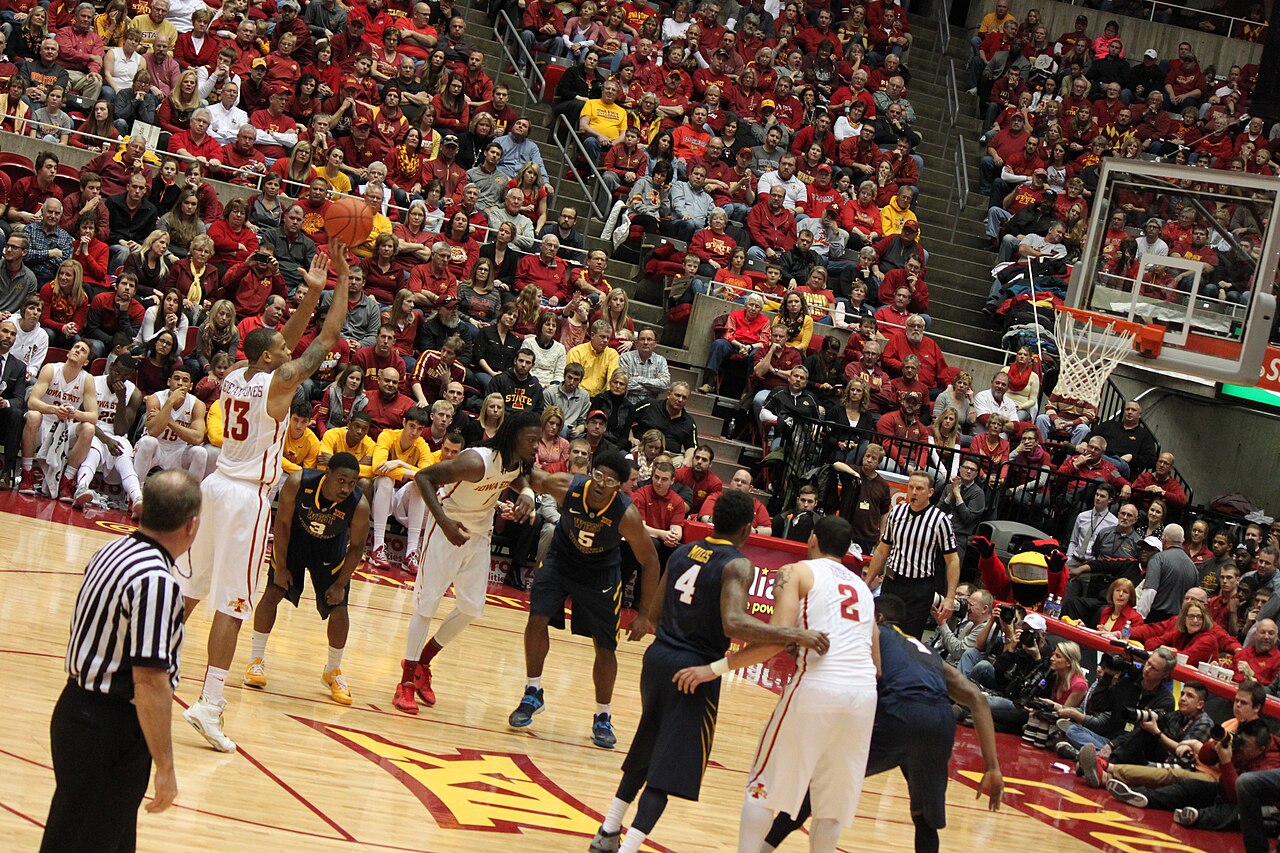
Basketball's endgame runs on rules that do not apply anywhere else in the match. A trailing team fouls on purpose to stop the clock and get the ball back, which sends the leaders to the free-throw line and creates possessions that would otherwise never have existed.
For a spread or a totals position this is genuinely important. The result can be beyond doubt while the number is still moving — a side up by fourteen with ninety seconds left can win by nine or by twenty depending entirely on whether the opposition chooses to foul. Anyone reading the clock as "this is over" and stepping away is misreading which market they are actually in.
This is the quiet advantage of following the NBA from here. Tips land roughly between half past four and nine in the morning IST depending on the host time zone, so the league arrives with your first coffee rather than at two in the morning. Compared with European football, which fills the small hours, it is a far more sustainable habit.
One thing to watch: the United States moves its clocks in November and March and India never does, so tip-off times in IST shift by an hour twice a season while the schedule itself looks unchanged. Check the listed IST time rather than trusting memory in those weeks. Live sports shows what is running at which hour, and responsible gaming covers session limits if a morning routine starts becoming a longer one.
FAQ
Totals, pace, overtime, late fouls and tip-off times in IST.
From tempo and efficiency rather than from how strong the teams are. Multiply the expected pace — possessions per team — by points scored per hundred possessions, then double it for both sides. At a hundred possessions and an offensive rating of 115, that gives a 230 line. This is why two excellent teams can produce a low total and two poor ones a high total: what matters is how fast they play and how efficiently, not how good they are.
Pace, in practice. Hold efficiency at 115 and move pace from 94 to 106 and the line swings 27.6 points. Hold pace at 100 and move efficiency from 110 to 120 and it swings 20. The two look comparable, but a twelve-possession gap between teams is common while a ten-point efficiency gap is rare. So when you are reading a matchup for a totals bet, tempo tells you more than shooting does.
It decides it, often single-handedly. Overtime is five extra minutes on a forty-eight-minute game, so it adds roughly a tenth of the regulation scoring rate — about 24 points on a 230-point pace. That is far more than the margin most totals bets are decided by, which means a game going to overtime will bust almost any under and rescue almost any over. It is the single largest source of variance in basketball totals.
Because deliberate fouling in the closing minutes stops the clock and sends players to the free-throw line. A trailing side fouls on purpose to get the ball back, which produces extra possessions and extra points in a stretch of game that would otherwise be running down. The result is that a match already decided can still add ten or twelve points to the total, and both the totals market and the handicap can move after the outcome is settled.
Roughly between 4:30 and 9:00 in the morning IST, depending on which US time zone is hosting. That makes the NBA a morning fixture in India rather than an overnight one, and considerably easier to follow than late European football. Worth noting that the United States changes its clocks in November and March while India never does, so tip-off times shift by an hour twice a season even though nothing on the schedule looks different.
Not really, and the difference is useful. Football margins cluster hard on small numbers, so a handicap of one goal behaves very differently from one of two. Basketball margins are spread across a much wider range without the same clustering, so moving a spread by a point changes the price smoothly rather than crossing a cliff. It makes basketball handicaps more forgiving to read, though it also removes the specific edges that key numbers create in other sports.
Because they depend on minutes, and minutes disappear in a one-sided game. If a side leads by thirty going into the fourth quarter, the starters sit and a points or rebounds line that looked comfortable at half-time never gets the playing time to reach it. When you back a prop you are also implicitly backing the game to stay close enough for the player to keep playing.
Markets open from ₹20, with each row showing its own minimum and maximum. Liquidity is deepest on NBA moneyline and totals, and thinner on college games and player props, where you will see wider prices and smaller maximums.
Explore FairPlay